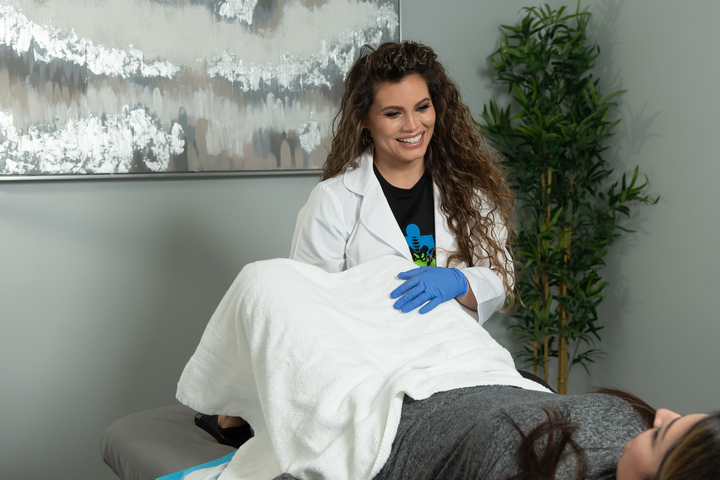
Healthcare business coaching has quickly become one of the most important resources for physical therapists, pelvic health providers, chiropractors, and healthcare entrepreneurs who want to grow a profitable private practice.
Clinical education prepares healthcare providers to treat patients. It does not prepare them to build a business.
Most physical therapists, occupational therapists, and pelvic floor specialists graduate with thousands of hours of clinical training but almost no education on marketing, patient acquisition, pricing, leadership, or business systems.
Because of this gap, many healthcare providers find themselves working extremely hard while still struggling to create the financial freedom and schedule flexibility they originally wanted.
Healthcare business coaching exists to close that gap.
By teaching clinicians how to build systems, attract patients, and operate profitable clinics, healthcare business coaching helps providers turn their clinical expertise into thriving businesses.
For physical therapists and pelvic health providers in particular, learning the business side of healthcare can completely change the trajectory of a practice.
Providers who want to understand how modern healthcare practices grow often begin by exploring educational resources such as the PelviBiz business coaching platform available at
https://pelvibiz.com
Why Healthcare Providers Struggle With Business
Healthcare professionals spend years developing clinical skills. They learn anatomy, treatment methods, diagnostic techniques, and evidence-based care.
Organizations such as the American Physical Therapy Association explain the depth of clinical education required for physical therapists at
https://www.apta.org
What these programs rarely teach is how to build a healthcare business.
Many private practice owners initially believe that providing excellent care will automatically fill their schedule. Unfortunately, great care alone does not guarantee patient volume.
A successful healthcare business requires several components working together.
consistent patient acquisition
clear brand positioning
effective communication with patients
operational systems that support growth
leadership that guides the business forward
Without these systems in place, providers often feel overwhelmed. They may experience unpredictable patient schedules, administrative chaos, and financial stress despite working long hours.
Healthcare business coaching helps clinicians build these missing pieces.
Instead of relying on guesswork, providers learn how to implement repeatable systems that create stability and growth.
The Role of Healthcare Business Coaching
Healthcare business coaching focuses on helping providers develop the skills required to run a successful practice.
The goal is not simply to increase revenue. The goal is to build a healthcare business that supports both patient outcomes and the provider’s quality of life.
Strong healthcare business coaching typically addresses several key areas.
Patient Acquisition
One of the most common problems in healthcare private practice is inconsistent patient flow.
A provider might have a full schedule one month and a nearly empty calendar the next. This cycle creates stress and prevents long-term planning.
Healthcare business coaching teaches providers how to build consistent lead generation systems so patients are regularly entering the practice.
These systems often include search visibility, community engagement, referral relationships, and educational marketing.
Many healthcare entrepreneurs use educational platforms and industry podcasts to learn these strategies, including the PelviBiz Podcast available at
https://pelvibiz.com/podcast
When patient acquisition becomes predictable, clinics gain stability.
Market Positioning
Another challenge healthcare providers face is differentiation.
Many clinics offer similar services, making it difficult for patients to understand why they should choose one provider over another.
Healthcare business coaching helps providers clarify their specialty and develop a clear message.
For example, a pelvic health provider may focus on postpartum recovery, pelvic pain, or pregnancy preparation. A physical therapist might specialize in athletes, chronic pain, or mobility restoration.
Research from organizations such as the Academy of Pelvic Health Physical Therapy highlights the growing need for specialty pelvic health care
https://www.womenshealthapta.org
Clear positioning allows providers to stand out and attract the patients who need their specific expertise.
Patient Communication and Conversion
Many clinicians feel uncomfortable discussing pricing or presenting full treatment plans.
This hesitation can lead to patients delaying care or dropping out early.
Healthcare business coaching helps providers develop confident communication skills that allow them to explain treatment plans clearly and help patients commit to their recovery.
Clinical research from organizations such as the National Institutes of Health demonstrates that patient education and engagement significantly improve treatment outcomes
https://www.ncbi.nlm.nih.gov
When patients understand the value of treatment, they are more likely to follow through with care.
This improves both patient outcomes and clinic revenue.
Operational Systems
Healthcare practices often become chaotic when the business relies entirely on the owner.
Administrative tasks, marketing efforts, patient communication, and scheduling can quickly become overwhelming.
Healthcare business coaching emphasizes building operational systems that organize these responsibilities.
Examples include patient onboarding workflows, scheduling systems, marketing automation, and team training processes.
Programs such as the PelviBiz Power Circle coaching community help providers implement these systems with mentorship and accountability
https://pelvibiz.com/power-circle
When strong systems exist, the clinic can grow without overwhelming the provider.
Leadership Development
Many clinicians initially see themselves as providers rather than business leaders.
However, growing a successful practice requires developing leadership skills.
Healthcare business coaching helps providers transition from clinician to CEO by teaching them how to delegate responsibilities, manage finances, hire team members, and guide long-term strategy.
Industry analysis published in Health Affairs frequently discusses the evolving role of healthcare entrepreneurship and leadership
https://www.healthaffairs.org
This leadership development is essential for sustainable growth.
Business Coaching for Physical Therapists
Physical therapists are increasingly seeking business coaching as the traditional clinic model continues to create challenges.
Insurance-based physical therapy often requires providers to see a large number of patients each day to maintain profitability.
High patient volume can lead to burnout and reduced quality of care.
Many physical therapists are now exploring alternative practice models such as cash-based clinics, specialty practices, telehealth services, and hybrid care models.
Healthcare business coaching helps physical therapists build these models successfully.
Instead of following outdated clinic structures, providers learn how to design businesses that prioritize both patient outcomes and provider well-being.
Educational events and business conferences such as those hosted by PelviBiz help clinicians learn these strategies in person
https://pelvibiz.com/events
Pelvic Health Providers and the Opportunity for Growth
Pelvic health is one of the fastest growing specialties within physical therapy.
As awareness increases around issues such as postpartum recovery, urinary leakage, pelvic pain, and diastasis recti, demand for pelvic floor therapy continues to rise.
Public health initiatives from organizations such as the U.S. Department of Health and Human Services highlight the growing importance of women’s health services
https://www.hhs.gov
Despite the growing demand, many pelvic health providers struggle to build thriving practices because they lack marketing and business systems.
Healthcare business coaching helps pelvic health providers turn their expertise into a clear message that attracts patients.
Providers who combine clinical skill with strong marketing and communication often experience rapid practice growth.
Systems That Allow Healthcare Businesses to Scale
Successful healthcare businesses rely on systems that allow growth without overwhelming the owner.
Several systems play a major role in scaling a healthcare practice.
Lead generation systems bring new patients into the clinic consistently.
Conversion systems help patients understand treatment plans and commit to care.
Delivery systems support efficient scheduling, documentation, and patient experience.
Scaling systems allow practices to expand through team members, group programs, online services, or telehealth.
When these systems work together, healthcare providers gain both revenue growth and time freedom.
Clinicians who want to learn how these systems work together often begin by exploring educational resources and coaching platforms such as the PelviBiz healthcare business coaching program
https://pelvibiz.com
Choosing the Right Healthcare Business Coach
Healthcare providers considering business coaching should evaluate several important factors.
A strong coach understands the unique challenges of healthcare businesses. The healthcare industry operates differently than many other industries, and advice must reflect those realities.
Providers should also look for structured frameworks rather than vague motivational advice. Clear systems are far more effective than general encouragement.
Community support is another important element. Entrepreneurship can feel isolating, and learning alongside other healthcare providers creates accountability and shared learning.
Finally, results matter. The best healthcare business coaching programs demonstrate real outcomes such as increased patient volume, improved revenue, reduced burnout, and stronger business systems.
The Future of Healthcare Entrepreneurship
Healthcare is changing rapidly as more providers seek autonomy, flexibility, and financial stability.
Private practices, specialty clinics, telehealth programs, and education-based healthcare businesses are expanding across the industry.
Physical therapists and pelvic health providers who combine clinical expertise with business strategy are positioned to lead this transformation.
Healthcare business coaching helps clinicians develop the skills necessary to build sustainable practices in this evolving environment.
Providers who invest in business education are often able to create clinics that support their patients, their families, and their long-term professional goals.
Healthcare providers already possess the clinical knowledge needed to change lives. With the right business systems, they can build practices that are both impactful and financially sustainable.
Charts You Can Insert
Chart: Why Healthcare Providers Struggle in Business
| Clinical Training | Business Skills Needed |
|---|---|
| Anatomy | Marketing |
| Diagnosis | Lead Generation |
| Treatment Planning | Sales Conversations |
| Patient Care | Financial Strategy |
| Evidence Based Practice | Systems & Operations |
Chart: Core Systems of Healthcare Business Growth
| System | Purpose |
|---|---|
| Lead Generation | Attract patients |
| Conversion | Turn leads into clients |
| Delivery | Provide efficient care |
| Operations | Organize workflow |
| Scaling | Expand revenue |
Chart: Traditional PT Model vs Modern Practice
| Traditional Clinic | Modern Practice |
|---|---|
| Insurance dependent | Cash or hybrid |
| High patient volume | Lower volume high value |
| Limited growth | Scalable revenue |
| Burnout risk | Schedule freedom |